
Hey there! As a wet wipe supplier, I often get asked about what wet wipes are made of. People are curious about the components that go into these handy little cleaning tools, and understandably so. After all, we use wet wipes in so many aspects of our daily lives, from cleaning our hands to wiping down surfaces. So, let's dive right in and explore the ingredients that make up wet wipes.
The Base Material: Nonwoven Fabric
The first thing you need to know is the base material of wet wipes, which is usually nonwoven fabric. Nonwoven fabric is made by bonding or interlocking fibers together. It's different from woven fabric, which is made by weaving threads in a pattern. There are several types of nonwoven fabrics used in wet wipes, such as spunlace, spunbond, and meltblown.
Spunlace nonwoven fabric is a popular choice. It's made by entangling fibers with high - pressure water jets. This process gives the fabric a soft and strong texture, making it perfect for wet wipes. It's gentle on the skin, so it's often used in baby wipes and personal care wipes.


Spunbond nonwoven fabric is produced by extruding molten polymer through spinnerets to form continuous filaments, which are then laid down on a conveyor belt and bonded together. It's more durable and less absorbent compared to spunlace, so it's commonly used in industrial and household cleaning wipes.
Meltblown nonwoven fabric is made by extruding a molten polymer through a die with many small holes, and then using high - velocity air to blow the polymer into fine fibers. It has excellent filtration properties and is sometimes used in combination with other nonwoven fabrics in wet wipes, especially those designed for cleaning and disinfecting.
The Liquid Solution
The liquid solution in wet wipes is what gives them their cleaning and disinfecting properties. It typically consists of water, surfactants, preservatives, and sometimes additional ingredients like fragrances and moisturizers.
Water is the main component of the liquid solution. It makes up a large percentage of the wet wipe's weight. Distilled or deionized water is often used to ensure that there are no impurities that could cause skin irritation or affect the performance of the other ingredients.
Surfactants are another important part of the liquid solution. They help to reduce the surface tension of water, allowing it to spread more easily and penetrate dirt and grime. There are different types of surfactants, such as anionic, cationic, non - ionic, and amphoteric. Anionic surfactants are commonly used in cleaning wipes because they are effective at removing grease and dirt. Non - ionic surfactants are often used in baby wipes and personal care wipes because they are gentle on the skin.
Preservatives are added to the liquid solution to prevent the growth of bacteria, fungi, and other microorganisms. This helps to extend the shelf life of the wet wipes. Common preservatives used in wet wipes include parabens, phenoxyethanol, and benzyl alcohol. However, in recent years, there has been a growing demand for preservative - free or low - preservative wet wipes, especially for products used on the skin.
Fragrances are added to give wet wipes a pleasant smell. They can be natural or synthetic. Some people prefer unscented wet wipes, especially if they have sensitive skin. On the other hand, fragranced wet wipes can make the cleaning process more enjoyable.
Moisturizers are sometimes added to wet wipes, especially those used for personal care. They help to keep the skin hydrated and prevent it from drying out. Common moisturizers used in wet wipes include glycerin, aloe vera, and lanolin.
Specialized Wet Wipes and Their Ingredients
Now, let's talk about some specialized wet wipes and the unique ingredients they might contain.
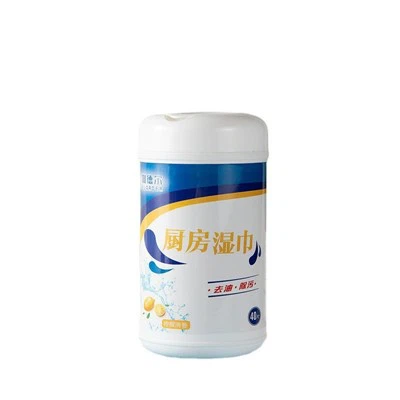
All Purpose Kicthen Wet Wipe
All Purpose Kicthen Wet Wipe are designed to clean various surfaces in the kitchen, such as countertops, stovetops, and appliances. In addition to the basic ingredients, they often contain degreasers to remove stubborn grease and food stains. These degreasers can be based on enzymes or solvents. Enzymes are natural proteins that break down organic matter, while solvents can dissolve grease and oil.
Wet Sweeping Cloth
Wet Sweeping Cloth are used for cleaning floors. They usually have a higher absorbency compared to regular wet wipes. The liquid solution in wet sweeping cloths may contain anti - static agents to attract dust and dirt, as well as disinfectants to kill germs on the floor.
Bag Packed Stainless Steel Wet Wipes
Bag Packed Stainless Steel Wet Wipes are specifically designed for cleaning and polishing stainless steel surfaces. They contain special ingredients that can remove fingerprints, smudges, and stains without scratching the surface. These ingredients may include mild abrasives and polishing agents.
Quality and Safety Considerations
As a wet wipe supplier, I understand the importance of quality and safety. We always ensure that the ingredients we use are of high quality and meet the relevant safety standards. For example, the nonwoven fabric should be free from harmful chemicals and have a consistent quality. The liquid solution should be formulated to be effective yet gentle on the skin.
We also conduct various tests on our wet wipes to ensure their performance. These tests include checking the absorbency, strength, and cleaning ability of the wet wipes. We also test for the presence of harmful substances, such as heavy metals and allergens.
Why Choose Our Wet Wipes
Our wet wipes are made with the highest quality ingredients. We use premium nonwoven fabric that is soft, strong, and absorbent. Our liquid solutions are carefully formulated to provide excellent cleaning and disinfecting properties while being gentle on the skin.
We offer a wide range of wet wipes to meet different needs. Whether you need baby wipes, personal care wipes, household cleaning wipes, or industrial wipes, we have the right product for you. And our specialized wet wipes, like the All Purpose Kicthen Wet Wipe, Wet Sweeping Cloth, and Bag Packed Stainless Steel Wet Wipes, are designed to provide targeted cleaning solutions.
Contact Us for Procurement
If you're interested in purchasing our wet wipes, we'd love to hear from you. Whether you're a retailer looking to stock our products or a business in need of bulk wet wipes for your operations, we can provide you with high - quality products at competitive prices. Don't hesitate to reach out and start a procurement discussion with us.
References
- "Nonwoven Fabrics: Principles and Applications" by David J. Vaughn
- "Surfactants in Consumer Products" edited by K. Kosswig and M. Stache
- "Handbook of Preservatives for Cosmetics and Personal Care Products" by Y. Pickering